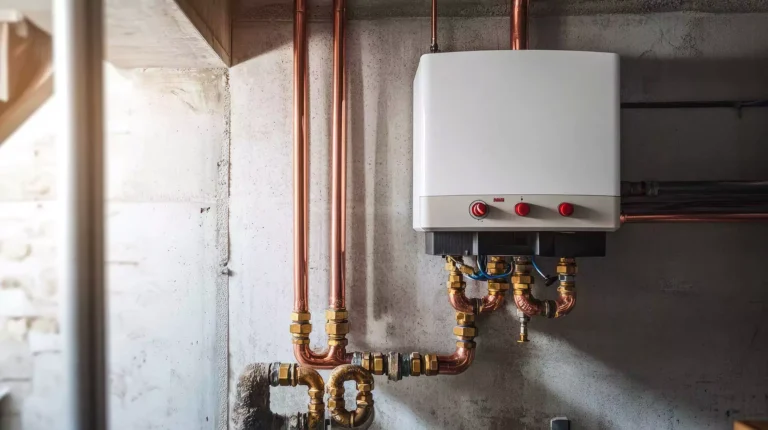
Understanding Tankless Water Heater Technology
Tankless water heaters represent a significant advancement in home comfort technology, providing endless hot water on demand while eliminating the energy waste associated with traditional tank storage systems. These innovative systems heat water directly as it flows through the unit, using powerful heat exchangers that activate only when you turn on a hot water tap. At Roto-Rooter Plumbing, we specialize in the professional installation and maintenance of these sophisticated systems, drawing on four generations of plumbing expertise to ensure optimal performance for homeowners throughout Sonora, CA and Kihei, HI and surrounding areas.
The fundamental principle behind tankless technology involves high-powered burners or electric elements that rapidly heat water as it passes through a series of copper heat exchangers. When a hot water tap opens anywhere in your home, a flow sensor detects the water movement and signals the control board to begin the heating process. Within seconds, the water reaches the desired temperature setting, maintaining consistent heat levels regardless of demand duration. This instantaneous heating process eliminates standby heat loss, which accounts for approximately 20 to 30 percent of energy consumption in traditional tank water heaters.
Energy Efficiency and Cost Savings Analysis
Modern tankless water heaters achieve efficiency ratings between 82 and 98 percent, depending on whether you choose a non-condensing or condensing model. Condensing units capture and utilize heat from exhaust gases that would otherwise escape through the venting system, pushing efficiency levels to their maximum potential. According to Department of Energy studies, households that use 41 gallons or less of hot water daily can achieve energy savings of 24 to 34 percent by switching to tankless technology. Even homes with higher consumption rates, using around 86 gallons daily, typically see efficiency improvements of 8 to 14 percent.
The long-term financial benefits extend beyond monthly utility savings. While tankless units require a higher initial investment, their operational lifespan typically exceeds 20 years with proper maintenance, nearly double that of traditional tank heaters. As a full service and construction plumbing company, we help customers calculate their return on investment by considering factors like current energy costs, household usage patterns, and available rebates or tax incentives. Many utility companies offer substantial rebates for upgrading to high-efficiency tankless systems, sometimes covering 10 to 15 percent of installation costs.
Installation Requirements and Professional Considerations
Proper tankless water heater installation requires careful evaluation of your home’s existing infrastructure, including gas line capacity, electrical service, and venting configurations. Gas-powered units typically require a three-quarter-inch gas supply line to deliver adequate fuel for optimal performance, while electric models may need upgraded electrical service to handle the substantial power draw during operation. Our family owned and locally operated Roto-Rooter Plumbing franchise maintains comprehensive expertise in both gas and electric installations, ensuring code compliance and system optimization.
Venting requirements vary significantly between condensing and non-condensing models. Non-condensing units require special stainless steel venting materials capable of withstanding exhaust temperatures exceeding 300 degrees Fahrenheit. Condensing models operate with cooler exhaust temperatures, allowing for PVC venting installation, which reduces material costs and provides greater flexibility in unit placement. We evaluate each home’s unique layout to determine optimal equipment location, considering factors like proximity to gas and water lines, exterior wall access for venting, and accessibility for future maintenance needs.
Sizing and Selection Guidelines
Selecting the appropriate tankless water heater size requires calculating your household’s peak hot water demand, measured in gallons per minute. We assess simultaneous usage scenarios, such as running multiple showers while operating a dishwasher, to determine maximum flow requirements. Temperature rise calculations factor prominently in sizing decisions, as incoming water temperature varies seasonally and geographically. Homes in Sonora, CA and Kihei, HI and surrounding areas typically require units capable of producing temperature rises between 50 and 70 degrees Fahrenheit to ensure comfortable hot water delivery year-round.
- Flow rate calculation: Add up the flow rates of all fixtures potentially used simultaneously
- Temperature rise determination: Subtract incoming water temperature from desired output temperature
- Capacity selection: Choose a model that meets both flow rate and temperature rise requirements
- Future needs consideration: Account for potential household growth or usage pattern changes
As a drain and septic company with extensive residential service experience, we understand that proper sizing prevents the frustration of inadequate hot water supply during peak usage periods while avoiding the unnecessary expense of oversized equipment. Our technicians utilize manufacturer sizing software and field experience to recommend systems that balance performance requirements with energy efficiency goals, ensuring long-term satisfaction with your tankless water heater investment.